
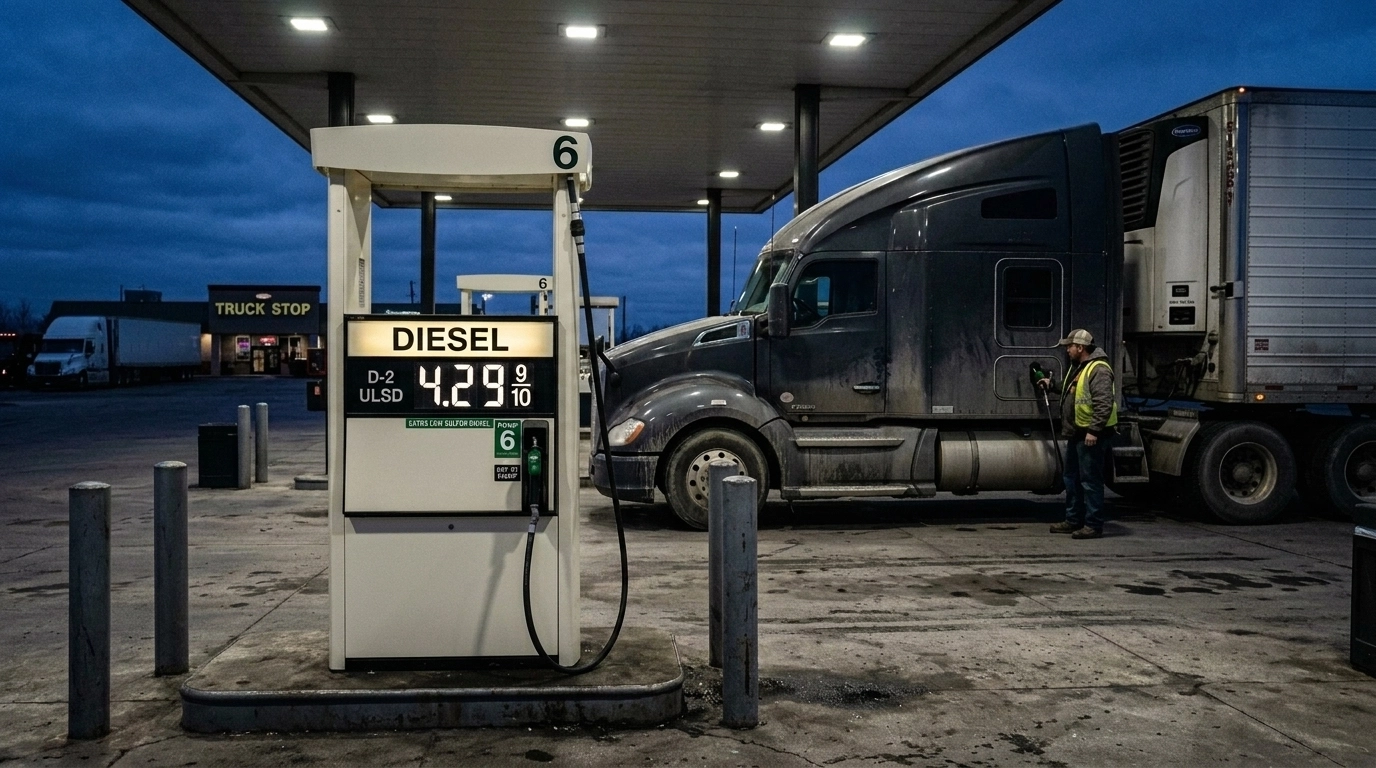
In the world of logistics, change is the only constant. Whether it is a sudden surge in diesel prices or a tightening of freight capacity, the industry operates in a series of ebbs and flows that can challenge even the most seasoned supply chain managers. For businesses that rely on the timely and cost-effective movement of goods, these fluctuations are not just headlines; they are variables that directly impact the bottom line.
At Fruition Logistics, we have seen these cycles repeat throughout history. We understand that while you cannot control the global oil market or the total number of drivers on the road, you can control your strategy. To maintain profitability and ensure your cargo reaches its destination on time, you must move beyond reactive measures and adopt a long-term, resilient approach.
How can your business maintain stability when the market feels volatile? The answer lies in structural planning, operational efficiency, and the right strategic partnerships.
The Anatomy of a Diesel Spike: Understanding Fuel Surcharges
When diesel prices climb, the immediate reaction for many shippers is one of concern. However, fuel volatility is an inherent part of the transportation industry. To manage these costs effectively, it is imperative to understand the mechanics of how fuel is billed and managed through freight brokerage services.
Most professional carriers and logistics providers utilize a fuel surcharge (FSC) mechanism. This is not an arbitrary fee but a calculated adjustment tied to objective data, typically the U.S. Department of Energy’s weekly diesel price index. By indexing fuel costs, we ensure a transparent and fair pricing model that reflects real-world conditions.

Why Structural Pricing Matters
Instead of negotiating a “flat rate” that may become unsustainable for a carrier when fuel prices rise, a structured fuel surcharge protects both the shipper and the transporter. It allows for:
- Predictability: You can forecast how your shipping costs will move in relation to the market.
- Carrier Retention: Ensuring carriers are fairly compensated for fuel prevents service failures and keeps your freight moving even during price spikes.
- Transparency: At Fruition Logistics, we provide clarity on these adjustments, ensuring you are never left guessing about the components of your freight spend.
Navigating Capacity Volatility: The 3PL Advantage
Fuel is only one side of the coin. Often, high fuel prices coincide with capacity crunches, periods where the demand for trucks far outweighs the supply. When capacity tightens, finding a reliable truck becomes a complex industrial challenge. This is where partnering with a 3PL (Third-Party Logistics provider) becomes a strategic necessity.
As a dedicated freight brokerage, we maintain an extensive network of vetted carriers across the U.S., Canada, and Mexico. When one lane becomes congested or a specific region experiences a shortage of equipment, our team has the visibility and connections to find alternative solutions that a single-carrier relationship simply cannot offer.
Do you have a plan for when your primary carrier says “no”? By diversifying your carrier base through a 3PL, you gain the “peace of mind” that comes from knowing your supply chain is not dependent on a single point of failure. Whether you require Full Truckload (FTL) or Less-Than-Truckload (LTL) solutions, a diversified network is your best defense against market volatility.
Operational Efficiency as a Shield
Resilience is built through efficiency. When costs rise, the goal should be to minimize waste within your logistics network. This involves “pulling back the curtain” on your current processes to identify where miles, time, and fuel are being squandered.

Route Optimization and Consolidation
Every redundant mile driven is a direct hit to your margin during a fuel spike. Our specialists at Fruition Logistics actively monitor shipments and utilize logistics monitoring to ensure the most efficient routes are being taken.
- Shipment Consolidation: Can multiple LTL shipments be combined into a single FTL? Consolidation reduces the total number of pickups and deliveries, significantly lowering the fuel-per-unit cost.
- Backhaul Opportunities: We look for ways to optimize “deadhead” miles: miles driven with an empty trailer. By aligning your freight with carriers who need to return to a specific region, we can often secure more competitive rates even in a high-cost environment.
- Lead Time Management: Providing more lead time allows your logistics partner to find the most cost-effective carrier rather than being forced to pay a premium for a last-minute spot market truck.
Protecting the Perishables: Reducing Spoilage Costs
For businesses dealing with temperature-sensitive goods, market volatility carries an additional risk: spoilage. When diesel prices rise, the cost of running a refrigeration unit (reefer) also increases. Furthermore, capacity crunches in the reefer market are often more severe than in dry van shipping due to the specialized nature of the equipment.
At Fruition Logistics, we specialize in temperature-controlled shipping. We understand that a delay isn’t just an inconvenience: it’s a potential loss of inventory. Reducing spoilage costs is a cornerstone of our service. We ensure that products are maintained at optimal temperatures from loading to delivery, providing real-time updates and active monitoring.

When capacity is tight, our unmatched execution ensures that your perishable freight is prioritized. We work with carriers who understand the high stakes of the cold chain, ensuring that your investment is protected regardless of the market’s “ebbs and flows.”
The Power of Strategic Partnerships
The most successful businesses do not view logistics as a series of transactions; they view it as a strategic partnership. In times of stability, it is easy to focus solely on the lowest price. However, when diesel spikes or capacity vanishes, the value of a professional, communicative, and honest logistics partner becomes undeniable.
A long-term relationship with a freight brokerage like Fruition Logistics provides you with a “one-stop shop” for complex needs. We handle the scheduling, the monitoring, and the problem-solving so that you can focus on your core business. We aren’t just moving trucks or storing your goods in our warehouse; we are managing your reputation and your bottom line.

The Bottom Line
Market cycles: the rising and falling of fuel prices and the tightening and loosening of capacity: are a natural part of the industrial landscape. They are not obstacles to be feared, but conditions to be managed.
By implementing structured fuel surcharge models, diversifying your carrier network through a reliable 3PL, and focusing on operational efficiencies like route optimization and spoilage reduction, your business can remain resilient. At Fruition Logistics, we provide the expertise and the execution needed to navigate these cycles with confidence.
Are you ready to bring stability to your supply chain? Contact our team today or request a quote to see how we can optimize your freight strategy for the long haul.