
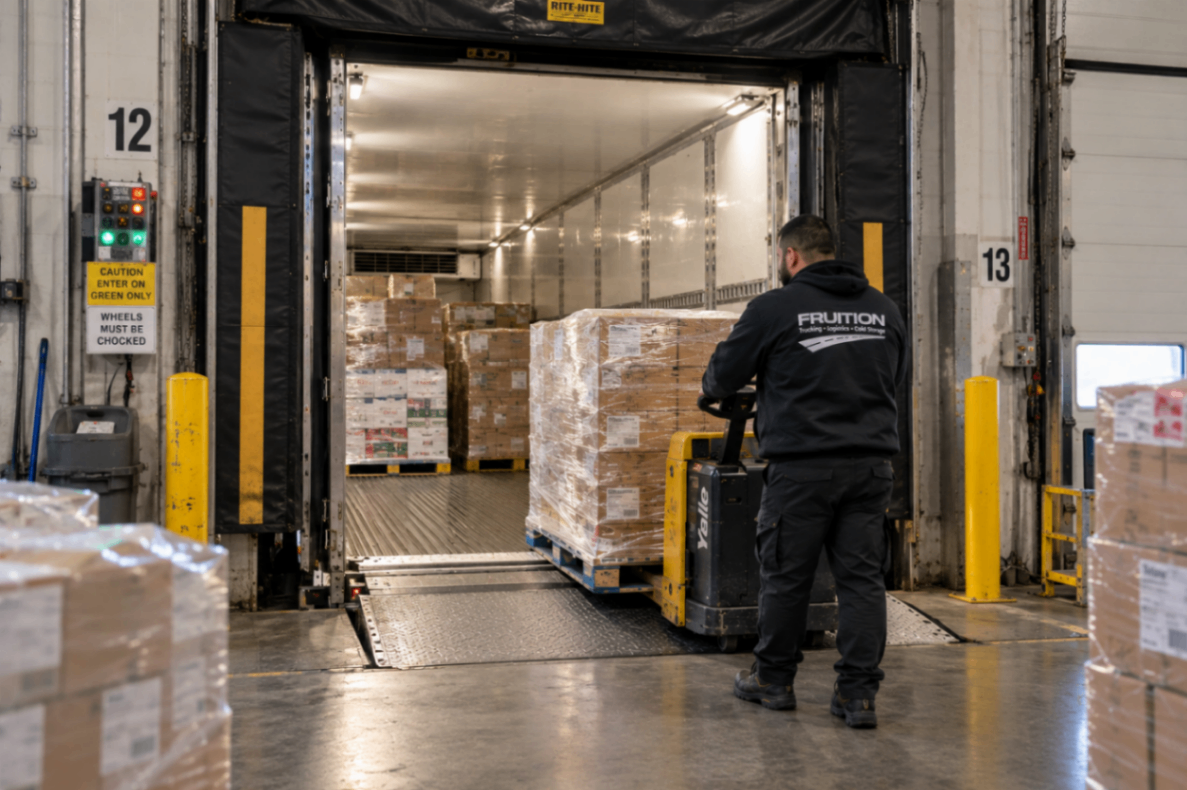
Temperature-controlled LTL can help your business move smaller quantities of perishable freight without taking up an entire trailer. But a refrigerated setting alone does not protect a shipment. Transit plans, pallet preparation, network handoffs, and clear instructions all matter.
As winter approaches and holiday food volumes build, available capacity and delivery schedules can become less predictable. These seven common mistakes, and the practical fixes, can help you protect product quality and plan with greater confidence.
1. Underestimating Transit Time, Stops, and Reefer Exposure
The mistake: Planning around an estimated point-to-point drive time instead of the shipment’s full LTL journey.
LTL freight may pass through terminals, transfer between vehicles, wait for an appointment, or travel with multiple stops. That extra time can matter for products with limited shelf life or little tolerance for temperature variation. A refrigerated unit also needs to be operating as intended during relevant legs and waits; do not assume every transfer or stop is automatically covered.
The fix: Plan for the whole route, including terminal cutoffs, weekends, appointment windows, cross-dock dwell, and seasonal delays. Ask the carrier or broker to explain the expected route and handoffs, how temperature control is maintained at each stage, who is responsible for reefer fuel and power where applicable, and what other products will be on the truck alongside your shipment, since co-loaded freight can affect temperature stability and handling. Build in contingency time based on your product’s actual tolerance, not just the standard transit estimate.
If you are unsure whether your product can accommodate the proposed schedule, share its shelf life and temperature limits with your logistics provider before booking. Our team coordinates temperature-controlled freight and can help assess a realistic plan for your shipment.
2. Sending Pallets That Are Not Built for LTL Handling
The mistake: Packing a pallet as though it will make one uninterrupted trip from shipper to consignee.
LTL freight may be handled more than once. Weak cartons, unstable stacking, poor wrapping, or labels hidden from view can lead to shifting, damage, or delays during transfers. Loading that blocks airflow can also interfere with temperature distribution.
The fix: Prepare each pallet to withstand repeated handling:
- Use sound pallets and stack cartons evenly, without overhang.
- Secure the load with suitable stretch wrap, strapping, and corner protection.
- Label every pallet clearly with the shipment details and handling requirements.
- Keep airflow paths and the refrigeration unit’s intake and discharge areas clear.
- Ship product at its required shipping temperature; do not rely on the trailer to chill warm freight.
Packaging standards should suit the product and its packaging, so confirm any special requirements with your team and carrier before pickup.

3. Writing “Keep Refrigerated” on the BOL and Stopping There
The mistake: Treating a broad phrase as a complete temperature instruction.
“Refrigerated” does not tell the carrier what range to maintain, which temperature scale to use, or whether the shipment has special operating requirements. A consignee is the party receiving the freight; clear instructions help ensure that everyone handling the shipment, from dispatch through delivery, understands what the product needs.
The fix: Put specific, consistent instructions on the bill of lading (BOL), booking details, and pallet labels. Include the required temperature range and units, product shipping temperature, and any relevant operating or handling directions. If the product has a maximum or minimum limit, state it clearly. An example such as “Maintain 34–38°F” is more actionable than “keep cold”, but use your product’s approved specifications, not a generic range.
Check that the paperwork, labels, and carrier dispatch instructions agree. If requirements are unclear or conflict, resolve them before loading. Fruition’s temperature-controlled freight services are designed for shipments with product-specific temperature needs.

4. Assuming Consolidation and Cross-Docking Are Risk-Free
The mistake: Choosing an LTL consolidation plan based on price alone.
Consolidation, the combining of compatible shipments, can support cost-effective service, but compatibility is more than destination. Product temperature requirements, packaging, strong-smelling goods that can transfer odors to nearby food products, delivery windows, and allowed dwell time all matter. Cross-docking, where freight transfers between vehicles at a terminal, adds another handling point. Does every terminal or staging area have the right conditions for your product? You should confirm rather than assume.
The fix: Ask how the shipment will move through the carrier’s network and whether temperature control is maintained during transfers and staging. Confirm that the product can travel with other freight under the planned conditions. Provide accurate shipment information in advance, and make sure appointment requirements are clear at pickup and delivery. For more on cold-chain handling practices, consult the GCCA Cold Chain Best Practices Guide.
5. Taking Carrier Equipment for Granted
The mistake: Assuming that a refrigerated service label guarantees that the specific equipment is clean, operating correctly, and set to the right conditions.
Equipment suitability can affect product protection. A unit fault, incorrect set point, poor cleanliness, or blocked airflow can undermine the shipment plan before the truck leaves the pickup location.
The fix: Establish what must be verified before loading. Confirm the equipment type and operating requirements, cleanliness, pre-cooling needs, set point, and unit condition. Check that the displayed setting matches the written instructions. If the equipment does not meet the agreed requirements, pause and escalate before loading rather than hoping the issue will resolve in transit.
The appropriate checks can depend on the product and carrier service. Define them with your logistics partner ahead of pickup and include any required temperature records or monitoring devices in the plan.
6. Misjudging Free Time and Detention
The mistake: Treating free time (the agreed period for loading or unloading before waiting charges may apply) as universal, or as only a cost issue.
LTL appointment windows, dock availability, and accessorial terms vary. Long waits can also affect a temperature-sensitive shipment, especially if the equipment or power arrangements during that wait have not been confirmed.
The fix: Agree on free time, detention or other waiting charges, appointment requirements, and escalation contacts before dispatch. Confirm how temperature control will be maintained if the driver must wait. Prepare freight and paperwork in advance, and record key times such as arrival, dock-in, loading or unloading, and release. During the holiday food season, allow extra planning time for busy docks and appointment constraints.
7. Assuming a Smaller Shipment Does Not Need Active Visibility
The mistake: Tracking only the truck’s general location, or not tracking the shipment at all, because the LTL shipment is smaller.
Location alone may not show whether a pickup was completed, an appointment was missed, or a transfer is taking longer than planned. Without clear monitoring and an assigned contact, a developing issue can go unnoticed until delivery.
The fix: Agree on shipment milestones and who will communicate updates. At minimum, confirm pickup, key transfer or terminal events where available, ETA changes, delivery, and proof of delivery. For higher-risk freight, discuss temperature monitoring and how alerts or exceptions will be handled. Decide in advance who needs to be notified, how quickly, and who can authorize next steps.
Fruition Logistics provides logistics monitoring and personalized shipment coordination. Our team can help maintain visibility and communicate exceptions so you have a clear point of contact throughout the move, and you are welcome to ask us about any of these checks before your next shipment.

THE BOTTOM LINE
Reliable temperature-controlled LTL depends on more than a refrigerated trailer. It requires realistic transit planning, secure pallets, precise BOL instructions, compatible consolidation, verified equipment, clear accessorial terms, and active communication.
Before you book, make sure your carrier or broker understands the product, the required conditions, and what should happen at every handoff. Fruition Logistics brings brokerage coordination, temperature-controlled expertise, and shipment monitoring together to help protect your freight and give your team greater peace of mind. Explore our temperature-controlled LTL services or request a quote to discuss your next shipment.