
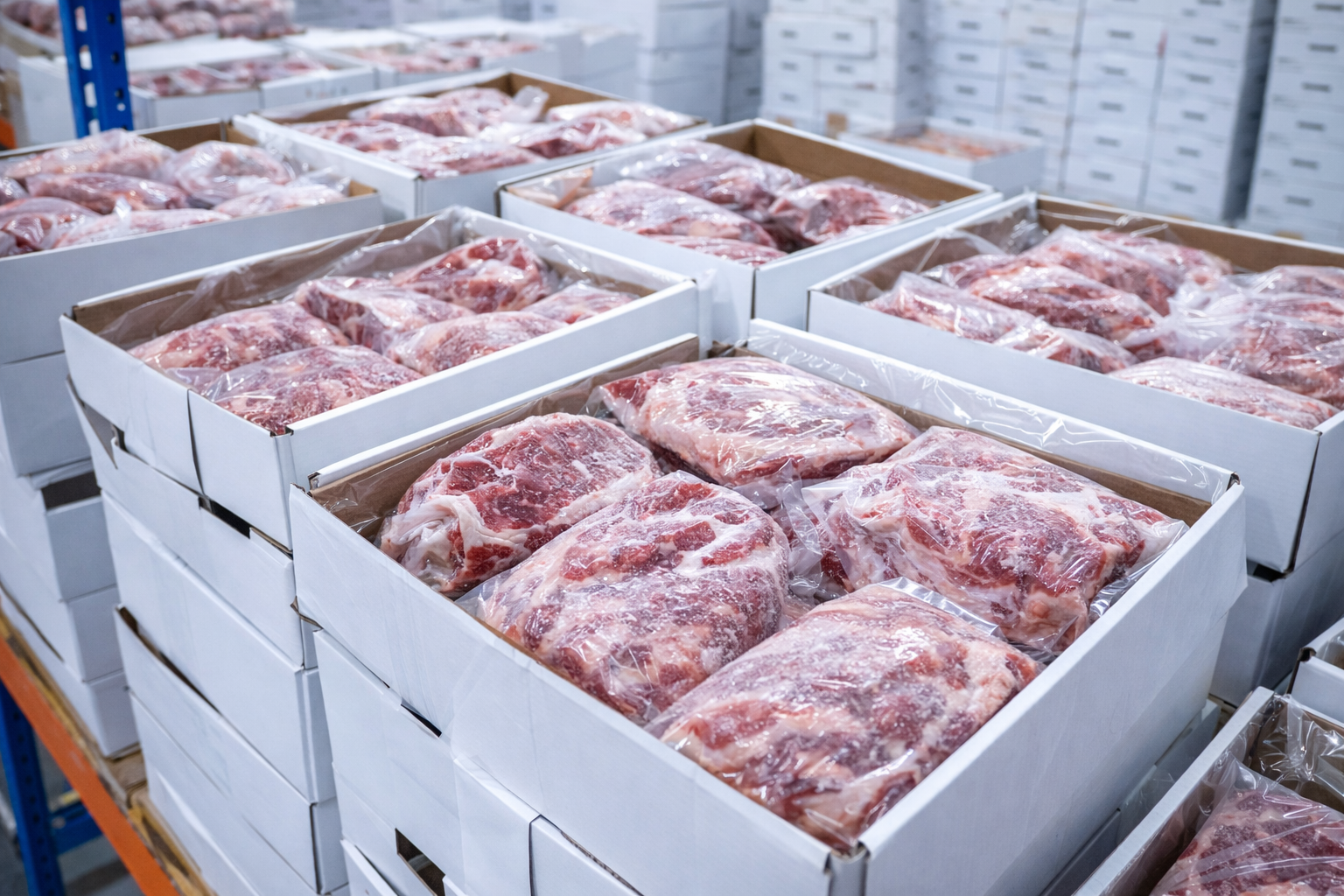
Shipping and storing meat isn’t just about moving freight from Point A to Point B. It’s about food safety, temperature control, compliance, and consistency—every step of the way. One mistake can lead to spoilage, rejected loads, or serious food safety risks. That’s why meat logistics requires specialized handling and the right partners.
Why Meat Logistics Is Different
Fresh, frozen, and processed meats are highly perishable, and all require different accommodations. Unlike shelf-stable foods, meat must stay within strict temperature ranges from the moment it leaves the processor until it reaches the end customer. Any temperature deviation—even briefly—can compromise quality or safety.
Key challenges include:
- Tight temperature tolerances
- Risk of cross-contamination
- Regulatory compliance
- Short shelf life
- Seasonal volume spikes
Temperature Control Is Non-Negotiable
Meat typically falls into two categories:
- Fresh / refrigerated meat: Stored and transported at ~28°F–34°F
- Frozen meat: Stored and transported at 0°F or below
Refrigerated trucks, insulated docks, and monitored cold storage facilities are essential. Continuous temperature tracking and documented logs help ensure compliance with food safety standards and protect both brands and consumers, while also providing traceability and accountability in the event of audits, inspections, or quality claims.
Proper Storage Matters Just as Much as Transport
Cold storage for meat isn’t just about being cold—it’s about organization and sanitation.
Best practices include:
- Dedicated zones for raw meat products
- Clear labeling and lot tracking
- First-In, First-Out (FIFO) inventory rotation
- Routine sanitation and inspections
- Separation from ready-to-eat or allergen-sensitive products
Facilities must follow strict guidelines set by organizations like the USDA and FDA, ensuring meat is handled in a way that prevents contamination and maintains product integrity.
Compliance Protects Your Brand
For meat shippers, compliance isn’t optional—it’s brand protection. Working with FDA and USDA-compliant carriers and warehouses reduces risk, improves traceability, and provides peace of mind during audits or inspections.
Important compliance elements include:
- Temperature documentation
- Sanitation records
- Trained personnel
- Secure, monitored facilities
Why Specialized Logistics Partners Matter
Not all logistics providers are equipped to handle meat. Specialized refrigerated LTL carriers and cold storage operators understand:
- How to minimize dock time
- How to consolidate freight without temperature risk
- How to manage partial pallets and mixed loads safely
- How to respond quickly if issues arise
For growing food brands, the right logistics partner doesn’t just move product—they help protect quality, reduce waste, and support scalable growth.
Final Thoughts
Shipping and storing meat demands precision, discipline, and experience. When done correctly, it preserves freshness, ensures safety, and builds trust with retailers and consumers alike. When done poorly, the costs – financial and reputational – can be significant.
If meat is part of your supply chain, working with a temperature-controlled logistics partner that understands the stakes (and steaks!) isn’t a luxury – it’s a necessity.
If you’d like to evaluate your cold storage needs or request a customized quote, contact us—we’re here to help keep your products protected and moving smoothly. 312-620-1225 or info@FruitionLogistics.com